
★ July 3, 2026 14:45 (UTC+8)
Title: THE NEXT GREAT ONE No. 2
Languege: English
❗This meeting will be audio-recorded.
It’s our pleasure to invite you to attend the webinar.
TSU will host the “RAC-SEWG Webinar: THE NEXT GREAT ONE No. 2” on 3 July 2026 at 2:45 PM (UTC+8).
This online conference focuses on recent developments in earthquake science and hazard mitigation, bringing together researchers from seismology, geophysics, geological engineering, and Earth science. Topics include earthquake processes, crustal deformation, rock mechanics, seismic hazard assessment, and emerging approaches to disaster risk reduction. By integrating perspectives from Earth observation, geophysics, and engineering, this webinar provides a platform for interdisciplinary exchange and collaboration.
This is a webinar on Earth Science. All are welcome to attend.
| Time (UTC+8) | Speaker & Topic |
| 14:45 – 15:00 | Welcome Fuqiong Huang – China Earthquake Networks Center |
| 15:00 – 15:45 | Newton Force Monitoring System: A New Approach to Imminent Earthquake Prediction He Manchao – China University of Mining and Technology-Beijing |
| 15:45 – 16:00 | Q&A session |
| 16:00 – 16:45 | Towards Resilient Communities: Developing Seismic Hazard, Risk, and Early Warning Research Chung-Han Chan – National Central University |
| 16:45 – 17:00 | Q&A session |
📌 Registration is now open 📌

Prof. Fuqiong Huang(黃輔琼) is a senior research professor in earthquake science at the China Earthquake Networks Center, under the China Earthquake Administration. She has long been engaged in research on earthquake monitoring, forecasting, and the physical processes governing earthquake preparation, with a particular emphasis on fluid–rock interactions and multi-parameter precursor systems.
Her work spans earthquake seismology, hydroseismology, and tectonophysics, focusing on how variations in groundwater levels, geochemical signals, and crustal deformation can be integrated to understand evolving stress conditions in active fault systems. She has contributed to the development of observational frameworks that combine seismic, hydrological, and geochemical data for improved earthquake hazard assessment and operational forecasting.
Over her career, she has participated in major national programs on earthquake monitoring and prediction, contributing to integrated approaches to seismic risk evaluation in complex tectonic environments. Her research has been influential in advancing a multi-disciplinary perspective on earthquake precursors, linking geophysical observations with subsurface fluid processes and fault-zone dynamics.
As session chair, Prof. Huang brings extensive experience in both scientific research and large-scale monitoring practice. She is well positioned to guide discussions at the intersection of observational seismology, earthquake physics, and forecasting methodologies, and to foster productive dialogue across different approaches to understanding earthquake proces
Prof. Manchao He (何滿潮) is a world-leading scientist in rock mechanics, underground engineering, and deep-earth geomechanics, and a member of the Chinese Academy of Sciences. He is currently a professor and doctoral supervisor at the China University of Mining and Technology (Beijing), where he also leads major national research programs and directs key laboratories in deep geomechanics and underground engineering.
Prof. He’s research addresses one of the most challenging frontiers in geoscience and engineering: the mechanical behavior of rock masses under extreme depth, high stress, and complex geological conditions. As human activities extend into deeper underground environments for energy, mineral resources, and infrastructure development, the understanding of rock instability, deformation, and catastrophic failure becomes increasingly critical. Prof. He has made pioneering contributions to this field by integrating theoretical rock mechanics, laboratory experimentation, field monitoring, and large-scale engineering applications into a unified scientific framework.
One of his most influential scientific achievements is the development of systematic theories describing large deformation and failure mechanisms in deep rock masses. He distinguished between different modes of instability, including gradual deformation processes and sudden, catastrophic failures such as rockbursts. His work has provided a mechanistic explanation for how energy accumulation and release in stressed rock systems can lead to dynamic instability. These insights have significantly advanced the theoretical foundation of modern rock mechanics and deep underground engineering science.
In parallel with theoretical advances, Prof. He has also driven major innovations in engineering practice. He is widely known for developing the “110/N00 coal mining method”, a transformative mining technology that eliminates the need for traditional coal pillars and enables self-forming roadway systems. This method has been widely applied in China’s coal mining industry and is regarded as a breakthrough in improving both mining efficiency and operational safety in complex underground conditions.
Another major contribution is his development of constant-resistance large deformation support systems (NPR—Negative Poisson’s Ratio-based bolts and cables). These support technologies are designed to maintain stability in highly deformable rock environments by absorbing extreme deformation energy rather than resisting it rigidly. They have been successfully applied in deep tunnels, mining excavations, and underground infrastructure projects, offering a new paradigm for engineering design in soft and fractured rock masses.
Prof. He has also led numerous national-level research projects, including key programs under China’s national science funding agencies and long-term strategic initiatives in deep-earth resource development. His research spans laboratory rock physics, field-scale geomechanical monitoring, and computational modeling of failure processes, forming a comprehensive approach to understanding and controlling underground hazards such as rockbursts, tunnel collapse, and mining-induced instability.
As an invited speaker, Prof. He brings a unique perspective that bridges fundamental geomechanics and large-scale engineering implementation. His work not only advances scientific understanding of how rocks behave under extreme conditions but also provides practical technologies that have been deployed in some of the world’s deepest and most challenging mining environments.
In summary, Prof. Manchao He represents a leading figure in modern rock mechanics and underground engineering. His contributions have reshaped how scientists and engineers understand deep-earth systems, moving the field toward an integrated framework where theory, experiment, and engineering practice operate seamlessly to address the challenges of deep resource exploitation and underground construction in the 21st century.
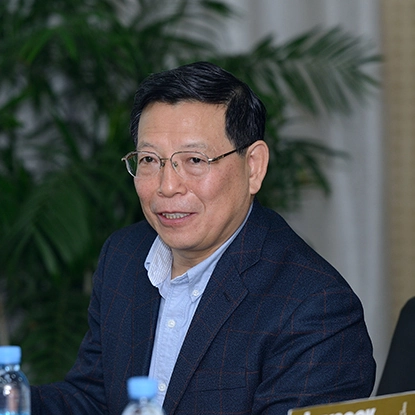
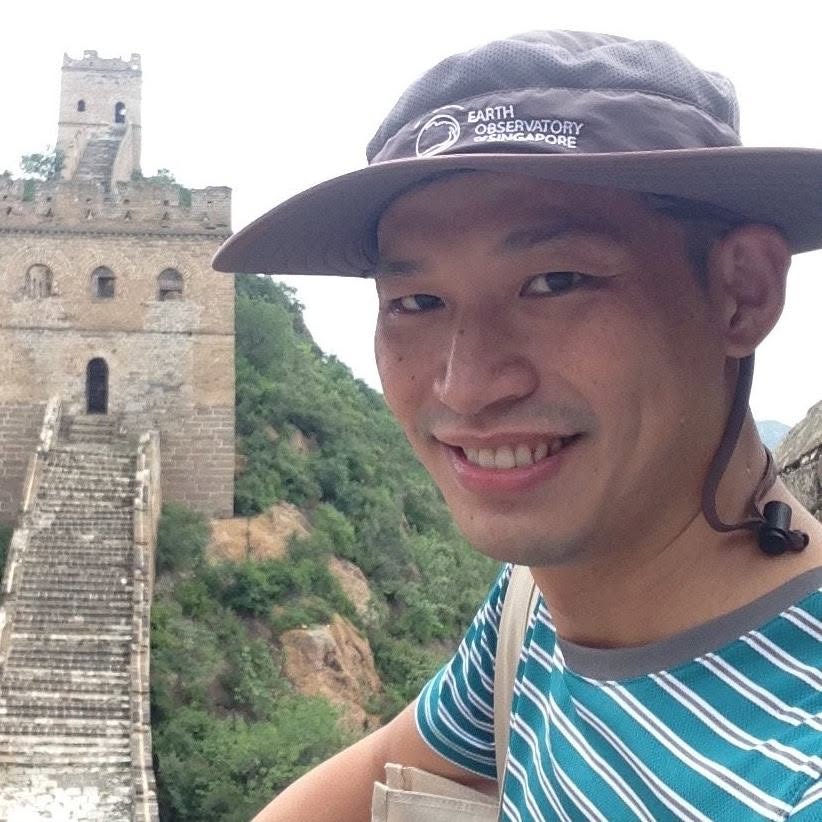
Prof. Chung-Han Chan (詹忠翰) is an Associate Professor in the Department of Earth Sciences at National Central University, Taiwan, and a leading researcher in engineering seismology and probabilistic seismic hazard analysis. His work lies at the interface between fundamental earthquake science and practical risk mitigation, with a strong emphasis on understanding how complex fault systems generate damaging ground motions and how such processes can be quantitatively modeled for hazard assessment and forecasting.
Prof. Chan received his Ph.D. in Geophysics from National Central University, where he subsequently continued his academic career and developed an active research program spanning earthquake source physics, seismic data analysis, and hazard modeling. Over the years, he has built a reputation for combining rigorous statistical approaches with physical insights into fault behavior, contributing to both methodological advances and applied frameworks for seismic risk evaluation in Taiwan and other tectonically active regions.
A central theme of his research is probabilistic seismic hazard assessment (PSHA). He has worked on improving the way earthquake recurrence, rupture complexity, and spatial-temporal clustering are incorporated into hazard models. In particular, his studies on multi-fault rupture probabilities and earthquake recurrence uncertainties have provided more realistic constraints on seismic risk in regions where fault interactions are significant. These contributions are especially relevant for Taiwan, where multiple active fault systems interact within a complex convergent plate boundary setting.
Another major contribution of Prof. Chan’s work is in the analysis and utilization of strong-motion seismic data. He has participated in the development and refinement of strong-motion databases, ensuring that high-quality observational records can be used effectively for both scientific research and engineering design. His research has supported improved ground motion prediction models, which are essential for earthquake-resistant infrastructure design and urban resilience planning.
In addition, Prof. Chan has contributed to studies on earthquake cycles and seismicity evolution, including the use of statistical physics-based models such as ETAS (Epidemic-Type Aftershock Sequence) frameworks to describe aftershock triggering and time-dependent seismic hazard. His more recent work explores real-time or near-real-time forecasting of ground shaking intensity, aiming to bridge the gap between seismic observation and operational decision-making.
Beyond Taiwan, Prof. Chan has also engaged in comparative tectonic studies in regions such as the Himalayas and other global collision zones, examining how large earthquakes influence regional stress fields and seismicity patterns. These studies highlight the broader applicability of his approaches to understanding earthquake processes in different tectonic environments.
As an invited speaker, Prof. Chan brings a unique combination of theoretical rigor, computational modeling expertise, and practical insight into seismic hazard mitigation. His presentation is expected to provide valuable perspectives on how modern seismology can move toward more dynamic, data-driven, and physics-informed hazard assessment frameworks. His work is highly relevant not only to earthquake scientists but also to engineers, policymakers, and risk analysts concerned with improving societal resilience to seismic disasters.
Overall, Prof. Chan represents a new generation of seismologists who integrate large datasets, statistical modeling, and physical understanding to address one of the most important natural hazards affecting densely populated regions around the world.