高能粒子動力學與立方衛星任務
Energetic Particle Dynamics and CubeSat Missions:
From Earth to Interplanetary Space
About the Course|課程簡介
隨著深空探測與立方衛星任務快速發展,高能粒子環境、地球輻射帶動力學與太空環境診斷,已成為現代太空任務設計的重要基礎。本課程將介紹高能粒子在太空中的來源、運動與傳輸機制,並結合 CubeSat 與深空探測任務案例,帶領學生理解太空環境如何影響衛星設計、酬載規劃與科學目標。
As deep-space exploration and CubeSat missions continue to advance, understanding energetic particle environments, radiation belt dynamics, and space environment diagnostics has become essential for modern space missions. This course introduces the origins, motion, and transport of energetic particles in space, and connects these topics with real mission examples in CubeSat and deep-space exploration.
Learning Highlights|學習重點
Instructors|授課教師
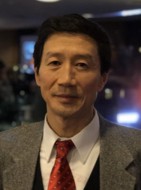
李炘璘 教授
Prof. Xinlin Li
University of Colorado Boulder, LASP
Expert in energetic particle dynamics, radiation belts, and CubeSat missions, with extensive experience in space instrumentation and international space missions.
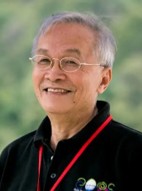
葉永烜 教授
Prof. Wing-Huen Ip
National Central University
Specialist in planetary science and space missions, with extensive experience in international space exploration and collaboration.

楊雅惠 教授
Prof. Ya-Huei Yang
National Central University
Research focus on solar activity, CMEs, and space weather impacts on Earth’s space environment.

汪愷悌 教授
Prof. Kaiti Wang
Tamkang University
Expert in aerospace engineering and space mission design, with a focus on plasma waves and space systems.
Enrollment|修課資訊
Target Students|修課對象
Senior undergraduate and graduate students in physics, astronomy, and engineering-related fields.
太空、物理、天文及工程相關領域之高年級大學生與研究生
Capacity|名額
Limited to 10 students
擬收學生人數:10
Registration|報名方式
Please register via the online form.
請透過線上表單報名:https://forms.gle/QnTZ7swup8dod2Us8
※ About the NCU Micro-course Program
中央大學自主學習微課程說明:
https://sites.google.com/view/ncuimc
Course Information|課程資訊
Date|上課日期
April 21 – May 8, 2026
2026年4月21日-5月8日
Location|上課地點
Room 1013, 10F, Science Building 4, National Central University
國立中央大學 科學四館10樓1013室 (視報名人數決定)
※ Most sessions are held in person. Selected sessions may be conducted online.
※ 課程以實體授課為主,部分課程將採線上進行。
Language|授課語言
English
英語授課
Credits|學分
GS0076 (1 credit)
GS0076 (1 學分)
Note: This course counts toward graduation credits but is not included in GPA calculation.
本課程學分列入畢業學分,但不列入當學期成績及平均成績計算。
Evaluation|評量方式
Participation and pre/post-course questionnaires
課堂參與及前後測問卷(用於評估學習成效)
Course Schedule|課程表
Apply Now|立即報名
Join this course to explore energetic particle dynamics and CubeSat missions.
歡迎報名參與本課程,進一步認識高能粒子動力學與立方衛星任務。
Contact|聯絡資訊
For inquiries, please contact: jkhsu23@gm.astro.ncu.edu.tw
如有相關問題,請聯繫:許仁愷(jkhsu23@gm.astro.ncu.edu.tw)
For inquiries, please contact: jkhsu23@gm.astro.ncu.edu.tw
如有相關問題,請聯繫:許仁愷(jkhsu23@gm.astro.ncu.edu.tw)