The Taiwan Space Union (TSU): Advancing Taiwan’s Space Program through Key Initiatives, Comprehensive Education, and Robust Community Engagement
Established in 2020, the Taiwan Space Union (TSU) is a multi-faceted organization dedicated to fostering collaboration across academia, government, and industry. TSU aims to cultivate the next generation of space professionals by driving key initiatives, providing comprehensive education, and promoting robust community engagement, thereby advancing Taiwan’s space program.
Core Pillars of TSU’s Mission:
Collaborating with Universities for Outreach: TSU actively collaborates with several universities, including National Cheng Kung University, National Central University, and Feng Chia University, for joint efforts in science education and outreach initiatives.
1. Key Initiatives, Workshops, Conferences & Decadal Survey White Paper
1.1 Serving as a National Think Tank: Since its inception in 2020, TSU has organized numerous satellite science workshops and forums, fostering collaboration across academia, government, and industry. These events have covered diverse topics including lunar missions, ocean color imaging, AIS technology, space science applications, smart agriculture, Earth observation, environmental monitoring, and public health concerns like air pollution.
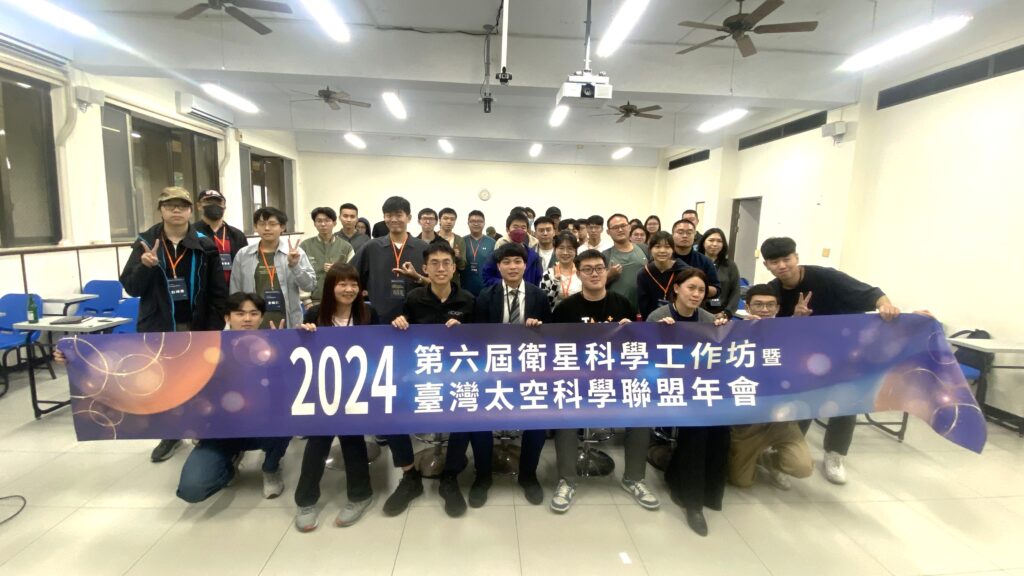
1.2 Co-hosting Major National Events: In 2023 and 2024, TSU collaborated with the National Space Organization (now TASA) on the Taiwan International Assembly of Space Science, Technology, and Industry (TASTI). TSU’s involvement included hosting the Satellite Science Workshop (TSU-SSW), developing student-focused programs, and facilitating discussions on space science whitepapers and future planning.
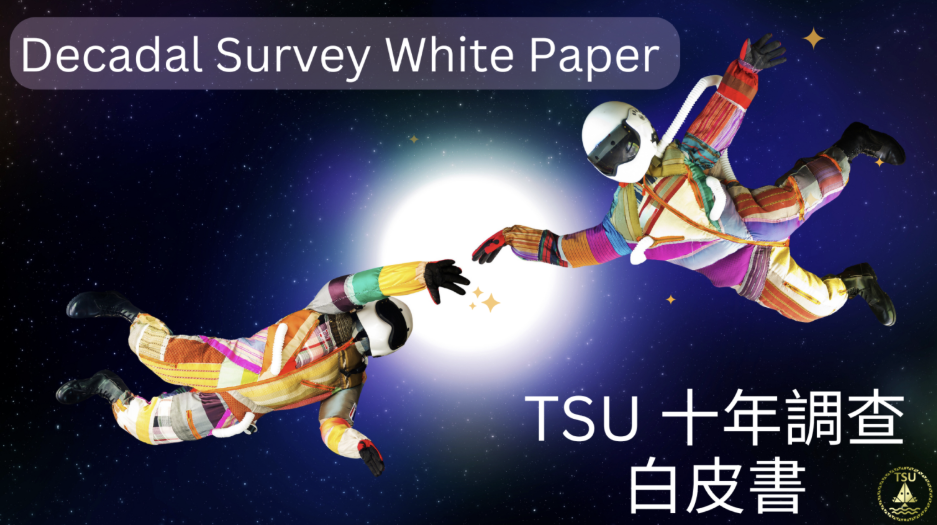
1.3 Spearheading Long-Term Vision: In late 2023, TSU spearheaded a Decadal Survey White Paper initiative, engaging experts to develop long-term visions and policy roadmaps for Taiwan’s space program.
2. Education & Online Learning Programs
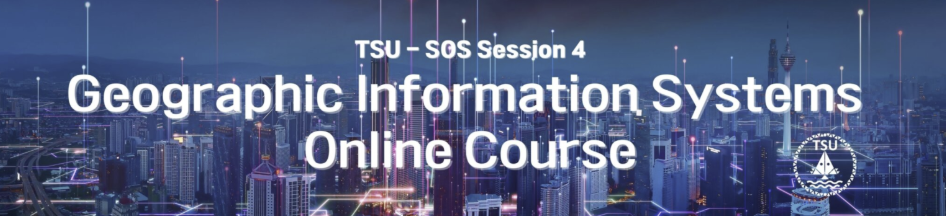
2.1 Offering Free Online GIS Courses: TSU has been proactive in educational outreach by offering free online Geographic Information Systems (GIS) courses. Produced in collaboration with universities like Feng Chia (FCU) and Kaohsiung University of Science and Technology, these courses cover remote sensing, spatial data analysis, smart cities, disaster response, and UAV technology, providing completion certificates to participants.
2.2 Launching the “Space Observations and Sustainability Development Course”: In 2022, TSU launched this course in partnership with National Cheng Kung University, NCU, and other institutions. Its curricula covered 3S technologies (geospatial, satellite, and simulation), mobile mapping, disaster management, and case studies, also backed by completion certificates.
2.3 Expanding Online Course Offerings:
2.3.1 Geographic Information Systems (GIS) Online Course (Late 2023): In collaboration with Feng Chia University’s GIS Research Center and Kaohsiung University of Science and Technology, TSU offered a free, English-taught online course. Topics included remote sensing, smart cities, data cubes, disaster management, and UAV/satellite image applications. All sessions were recorded and available for review, with completion certificates provided. (Links: https://twspaceunion.org/tsu-sos1/, https://twspaceunion.org/tsu-sos2-sar/, https://twspaceunion.org/tsu-sos3-gis/, https://twspaceunion.org/tsu-sos4-gis/)
2.3.2 Space Observations and Sustainability Course (Feb-Jun 2022): This free online English course, delivered collaboratively with faculty from multiple universities, covered 3S technology (spatial, satellite, simulation), mobile mapping, disaster management, and case studies. Completion certificates were issued.
2.3.3 Producing Additional Specialized Courses: TSU has also developed various lecture series, including:
- SAR Remote Sensing for Environmental Monitoring
- TSU Space Technology Online Lectures (https://twspaceunion.org/tsu-space-technology-online-lectures/)
- TSU–Georgia Tech SMART Online Course (focused on spacecraft and CubeSat technology) (https://twspaceunion.org/cubesat/)
- All these sessions were recorded for on-demand learning.
2.4 Supporting High School Science Education: TSU offers science micro-lectures for high school students, aligning with Taiwan’s new curriculum and facilitating online interactions between experts and students. These resources are freely accessible to teachers and students.
3. Seminars & Interactive Formats
3.1 Running the PRISM Seminar Series: TSU regularly hosts the PRISM Seminar Series, featuring talks from leading scholars online via platforms like Google Meet. These seminars serve as continuous professional education, bringing together academia, industry, and government to share progress and foster international dialogue. (Example: Dr. Min-Yang Chou’s presentation on space weather impacts on the ionosphere on August 8, 2025.) (https://twspaceunion.org/prism/)
3.2 Hosting Online Moon Science Seminars: Launched in October 2020, these series cover lunar plasma environments, surface geology, mission design, and more, featuring presenters ranging from seasoned Apollo-era scientists to emerging researchers. (https://twspaceunion.org/moon/)
3.3 Organizing Specialized Webinars and Workshops: Examples include:
3.3.1 Bilateral India-Taiwan Webinar on Remote Sensing, Air Pollution, and Public Health: This webinar highlights international collaboration on critical topics like environmental monitoring and public health. (https://twspaceunion.org/bilateral-india-taiwan-webinar-on-remote-sensing-air-pollution-and-public-health/ and https://twspaceunion.org/bit-srsapph-on-4-28/)
3.3.2 2025 Space Biomedicine and SAR Workshop: This past event showcased advanced applications in space technology, potentially building on existing SAR lecture series. The workshop served as a platform for participants to gain a deeper understanding of the latest developments and practical applications in the field. (https://twspaceunion.org/2025_space-biomedicine_sar/)
4. Public Engagement & Youth Empowerment
4.1 Engaging Students in Workshops: TSU’s workshop series consistently includes a dedicated student day. These days are designed to engage university student teams, encouraging participation, facilitating in-person dialogues with professionals, and providing platforms for sharing research ideas. These components have been a staple since the fourth Satellite Science Workshop in 2022.
4.2 Leading Mission Design Forums: The Mini-Moon Workshop (2022), a lunar payload mission design forum, helped aspiring participants refine their mission ideas and gain hands-on guidance, including addressing Moon-specific design challenges.
4.3 Co-hosting Local Science Forums: TSU collaborates with programs like TTSS (Taiwan Science Talent Development) to co-host local science forums, such as a Pingtung-based space science discussion and a public talk on space debris at the Lee Kuo-Ting Residence.
4.4 Collaborating with Universities for Outreach: TSU actively collaborates with several universities, including National Cheng Kung University, National Central University, and Feng Chia University, for joint efforts in science education and outreach initiatives.